


Each perfume, a chapter in the history of Spain
nBitor Perfume Collection – Spanish Art and Heritage
nBitor fragrances are inspired by moments and symbols that define the essence of Spain. Each perfume is an artistic interpretation of its heritage, an experience that combines emotion, culture, and beauty. The bottle's understated yet contemporary design frames the depth of the olfactory notes, evoking the elegance and character of a country with an unparalleled sensory identity.
50 ml - 145€
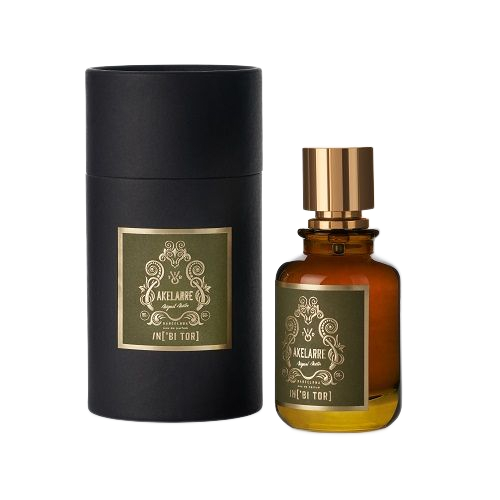
Akelarre
Earthy, metallic, animalistic, dark
> Akelarre
Our new perfume, created by Miguel Matos, is inspired by one of Goya's Black Paintings, known as The Witches' Sabbath, The Great He-Goat, or The Akelarre. It is believed that his work, The Akelarre, was a critique of the oppressive practices and persecution of the Inquisition, exploring themes such as violence, intimidation, and, at the same time, aging and death. Goya was around 75 years old at the time, living alone and suffering from severe mental and physical ailments.
nBitor's new perfume is a very risky project and proposition, even for the world of niche-artistic perfumes. As Miguel Matos explains, to represent Goya's work, "I had to create a truly dark and almost anguished fragrance, one that would evoke turbulent feelings and events, and at the same time, a perfume that would convey beauty in its grotesque form. It's a very earthy and metallic perfume, with a very sensual heart, something capable of awakening very intense feelings and images. I've used many unusual notes with the aim of making the result extremely impactful, a scent that may not be easy to wear but that holds a great deal of thought and emotion within."
Olfactory notes
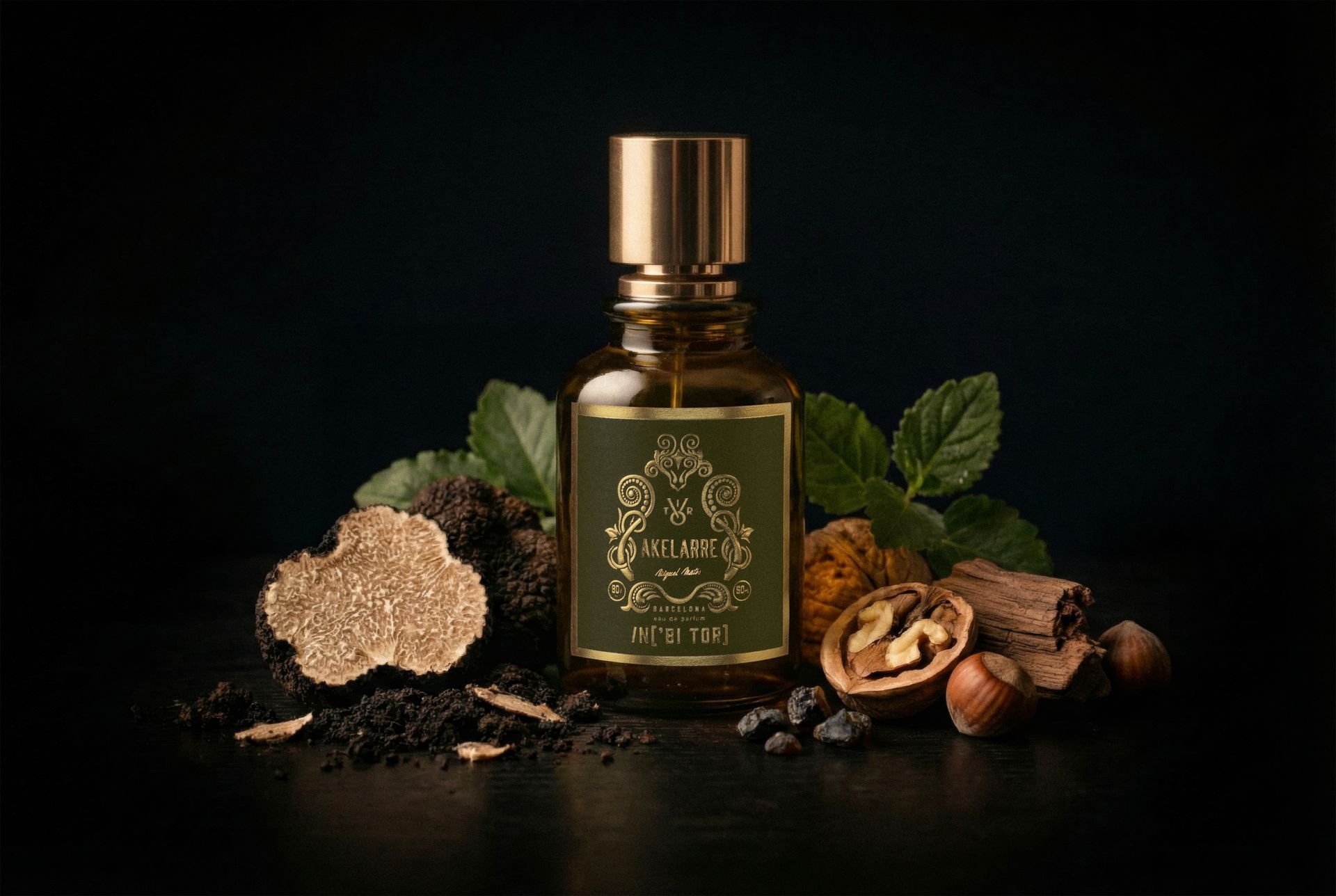
Top notes: White truffle, coffee, nuts, cinnamon, apple.
Heart notes: Rose, metallic notes, cypriol, geosmin.
Top notes: Patchouli, amber, cedar, hyraceum.
Nose: Miguel Matos.
> Description
Between the 14th and 18th centuries, religious and cultic superstitions, magic, sorcery, and witchcraft evolved in a unique way throughout all areas of European Christendom. Fear spread everywhere. Many were convinced that God, to punish the sins of humankind, allowed the Devil to act in the world through his agents. The artist Francisco Goya was a staunch defender of the principles of the Enlightenment, which prioritized reason over the religious and cultic superstitions that had existed for centuries. Between 1819 and 1823, Goya painted fourteen works (known as the Black Paintings) dedicated to this dark vision, incited by the religious superstitions of the society he detested. The fourteen works were painted using the dry-set oil technique (on plaster-covered walls) at his home, "La Quinta del Sordo," on the outskirts of Madrid. Goya lived as a solitary, deaf recluse. Art historians believe that these works reflect his great disillusionment with society and the deterioration of his health, as they express his deepest fears and darkest depression in a nightmarish and disturbing way.
It is believed that his work, The Witches' Sabbath or The Great He-Goat, was a critique of the oppressive practices and persecution of the Inquisition. Goya's The Witches' Sabbath explores themes such as violence, intimidation, aging, and death. The silhouette of Satan, in the form of a goat, is projected in the moonlight over a coven of terrified witches. The term "witches' sabbath" is a generic term for a gathering or meeting of witches for the performance of rituals and spells, whether as a pre-Christian or neo-pagan religious belief, or accepted in Christian writings as acts of invocation and worship of Lucifer.
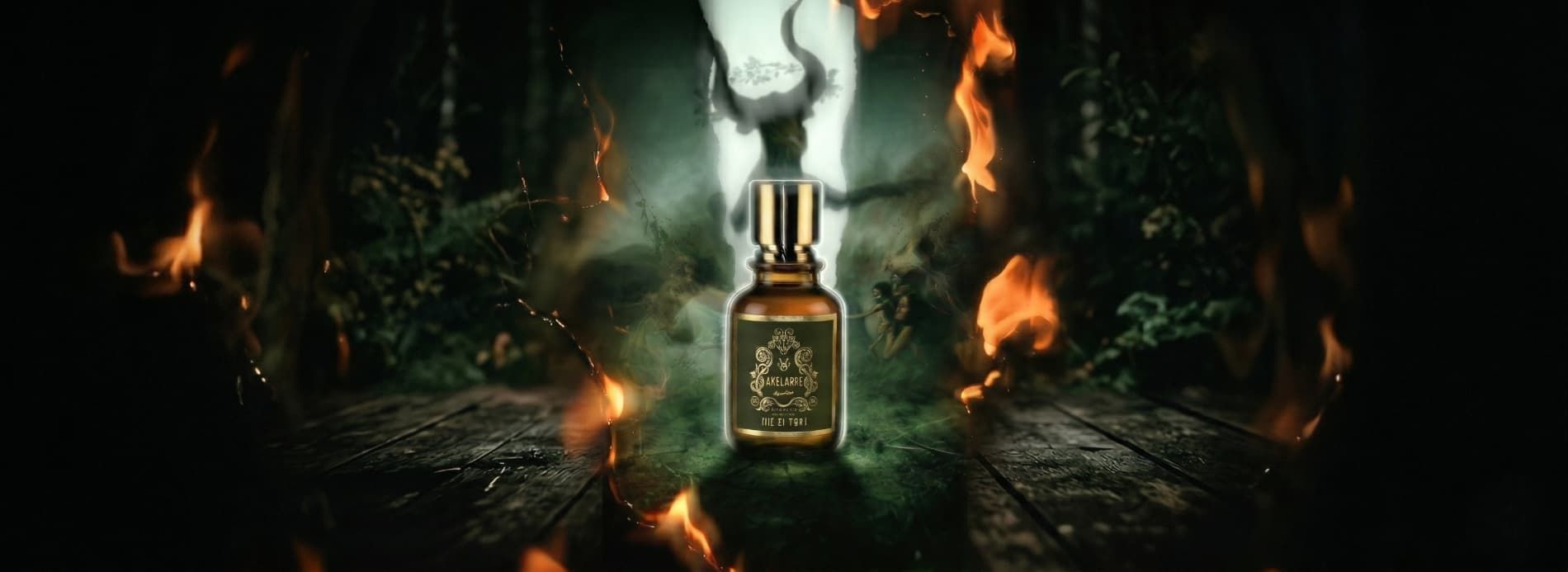
Our new perfume, created by Miguel Matos, is inspired by one of Goya's Black Paintings, known as The Witches' Sabbath, The Great He-Goat, or The Akelarre. It is believed that his work, The Akelarre, was a critique of the oppressive practices and persecution of the Inquisition, exploring themes such as violence, intimidation, and, at the same time, aging and death. Goya was around 75 years old at the time, living alone and suffering from severe mental and physical ailments.
nBitor's new perfume is a very risky project and proposition, even for the world of niche-artistic perfumes. As Miguel Matos explains, to represent Goya's work, "I had to create a truly dark and almost anguished fragrance, one that would evoke turbulent feelings and events, and at the same time, a perfume that would convey beauty in its grotesque form. It's a very earthy and metallic perfume, with a very sensual heart, something capable of awakening very intense feelings and images. I've used many unusual notes with the aim of creating an extremely impactful result—a scent that may not be easy to wear but that holds a great deal of thought and emotion within."
On one hand, Akelarre represents the dark side that humanity carries within, often born of ignorance. On the other, it represents the positive side of our capacity to grow and evolve into something better. The perfume symbolizes the negative aspects that can lead to acts like the Inquisition, but also the advancement of society thanks to the principles of the Enlightenment, which prioritized reason over religious superstitions and cults. Surprisingly, and unfortunately, in many societies today, there is a resurgence or trend that rejects the Enlightenment and logic. As a society, we must be acutely aware of this reality to be prepared to combat it, just as Alonso de Salazar y Frías did during the Inquisition, and thus prevent the rise of a society where ignorance and darkness once again prevail.
Alonso de Salazar y Frías (1564-1636) was the inquisitor who tried to stop the collective hysteria surrounding religious superstitions, sorcery, and witchcraft (which originated in other European countries). He succeeded in getting the Spanish Inquisition to declare that witchcraft could not be persecuted because it did not exist, thus ending the superstition decades or even centuries before other European countries. During those epidemics of collective hysteria that erupted around witchcraft, few people kept their cool. And he not only achieved that, but he also managed to quell the situation in Zugarramurdi and bring about a legislative change: in 1614, the Supreme Court of the Inquisition, and from there to the civil courts, denied the existence of witchcraft. The truth is that in Spain there was little persecution of witchcraft, and in fact, not only were there fewer cases, but they ended sooner.
50 ml - 145€
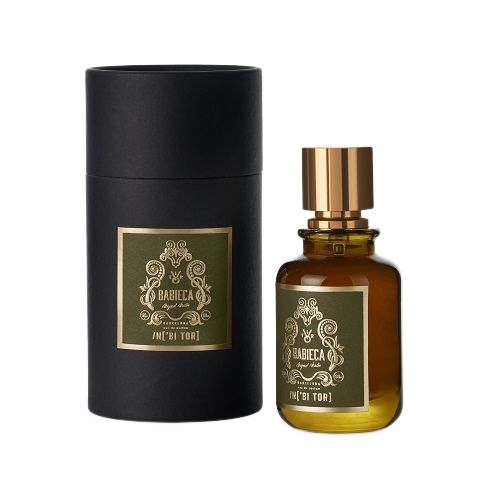
Babieca
The Cid's horse | Leather, tobacco, hay
> Babieca
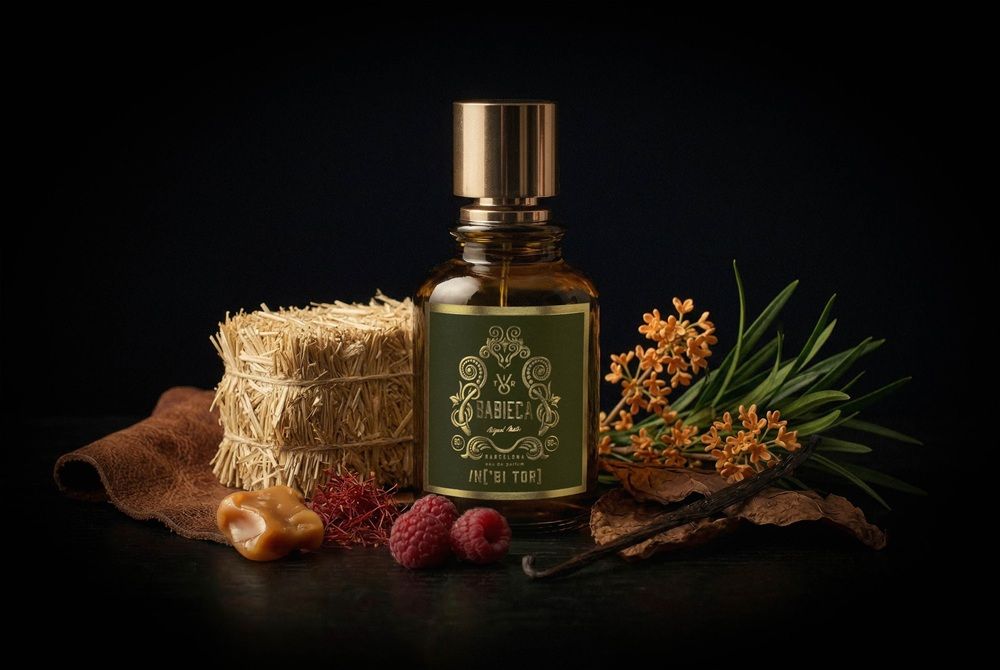
Babieca is a fragrance of smoke and presence — of leather warmed by the body, of tobacco rising slowly in the air, of hay resting in the stable at dusk. Its animalic character is instinctive and powerful, shaped by strength and endurance. Beneath this intensity unfolds a softer warmth, where notes of raspberry, caramel, and vanilla appear not as sweetness, but as contrast — a quiet, intimate counterpoint to the rawness of leather and smoke.
The perfume evokes the atmosphere of medieval Spain during the time of the Reconquest, not through the violence of battle, but through what surrounded it: horses, skin, breath, and closeness; the scent of lived bodies and shared nights by the fire. Babieca speaks of loyalty, movement, and the silent bond between rider and mount. Babieca was the war horse of Rodrigo Díaz de Vivar, known as El Cid Campeador, one of the most enduring figures of Spanish history.
This duality lies at the heart of the fragrance. The smoky, animalic structure reflects power and movement, while the gourmand facets — raspberry, caramel, and vanilla — evoke Babieca’s hidden tenderness, her warmth, and her quiet humanity. Strength and softness coexist, inseparable.
Olfactory notes
Top notes: Raspberry, Saffron, Aldehydes, Cade.
Heart notes: Osmanthus, Tobacco, Hay, Cypriol.
Top notes: Leather, Musk, Vanilla, Caramel, Oakmoss, Patchouli, Civet.
Nose: Miguel Matos.
> Description
Babieca is a fragrance of smoke and presence — of leather warmed by the body, of tobacco rising slowly in the air, of hay resting in the stable at dusk. Its animalic character is instinctive and powerful, shaped by strength and endurance. Beneath this intensity unfolds a softer warmth, where notes of raspberry, caramel, and vanilla appear not as sweetness, but as contrast — a quiet, intimate counterpoint to the rawness of leather and smoke.
The perfume evokes the atmosphere of medieval Spain during the time of the Reconquest, not through the violence of battle, but through what surrounded it: horses, skin, breath, and closeness; the scent of lived bodies and shared nights by the fire. Babieca speaks of loyalty, movement, and the silent bond between rider and mount.
Babieca was the war horse of Rodrigo Díaz de Vivar, known as El Cid Campeador, one of the most enduring figures of Spanish history. Half historical, half legendary, El Cid lives on through the Cantar de mío Cid, the great Castilian epic that recounts his final years and heroic deeds. At his side rode Babieca, a mount whose name would become inseparable from his own.
According to tradition, Babieca was chosen from an Andalusian herd offered by Rodrigo’s godfather, the monk Pedro El Grande. When the young knight selected an animal considered unimpressive, his godfather is said to have exclaimed: “¡Eso es una babieca!” — a foolish choice, something of little worth. The name endured.
With time, that seemingly ordinary horse would become one of the most renowned in Spanish history. What is less widely known is that Babieca was not a stallion, but a mare — a detail that transforms the legend. Beneath armor, steel, and warfare, there existed a feminine presence defined not by fragility, but by resilience, intuition, and grace.
This duality lies at the heart of the fragrance. The smoky, animalic structure reflects power and movement, while the gourmand facets — raspberry, caramel, and vanilla — evoke Babieca’s hidden tenderness, her warmth, and her quiet humanity. Strength and softness coexist, inseparable.
Babieca is a perfume about devotion rather than domination, about courage tempered by sensitivity. Like the mare from which it takes its name, it reminds us that true power does not always announce itself loudly — sometimes it reveals itself through loyalty, endurance, and grace.
50 ml - 150€
Bucaro Royal
Opulent, citrusy, floral, earthy, intriguing.
> Bucaro Royal
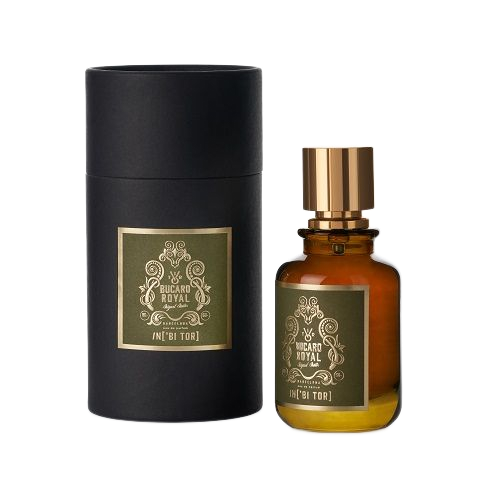
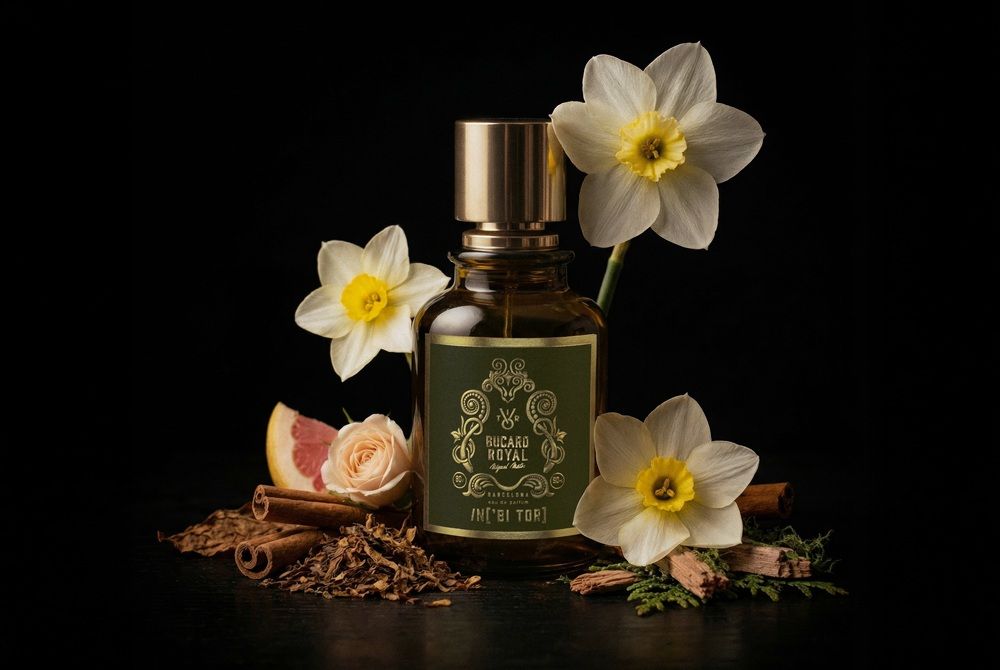
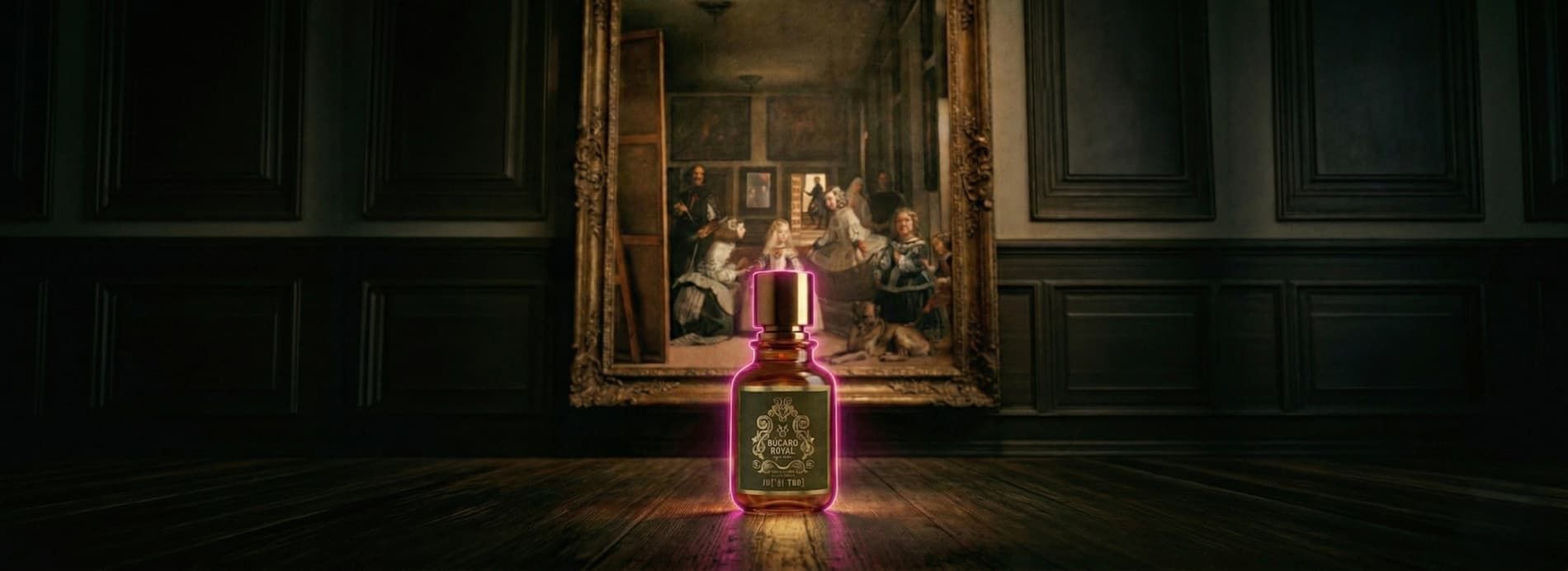
Inspired by the legacy of "Las Meninas," Bucaro Royal immerses us in a sensory journey that evokes the majesty of bygone eras. The initial notes of grapefruit and bergamot, with their sparkling freshness, instantly transport us to the lush gardens of the royal court, where freshly harvested citrus fruits fill the air with their intoxicating aroma.
As the fragrance unfolds, we encounter an exquisite floral bouquet, where narcissus, raspberry, and rose intertwine in a harmonious dance of aromas. These notes, reminiscent of the bouquets that adorned royal halls, fill the heart of Bucaro Royal with timeless elegance.
But it is in the depths of this fragrance where its true magic lies. Tobacco, with its smoky and earthy aroma, transports us to the opulent halls of the court, where nobles indulged in the decadent pleasures of perfumes infused with this exotic plant. Guaiac wood and sandalwood evoke the richness of the hand-carved furniture that adorned the royal chambers, while vanilla adds a warm and comforting note, like the embrace of a loved one.
Oakmoss, castoreum, and coumarin add an intriguing depth to the fragrance, creating an aura of mystery that invites you to delve deeper into its essence. And finally, Chinese cedar, with its resinous and woody aroma, reminds us of the vastness of the colonial territories that enriched the Spanish empire and its court.
Bucaro Royal received an Honorable Mention in the Best Independent Perfume category at the 11th Art and Olfaction Awards in 2025 held in Los Angeles.
Olfactory notes
Top notes: Grapefruit, bergamot.
Heart notes: Narcissus, raspberry, rose, tobacco.
Base notes: Tobacco, guaiac wood, sandalwood, vanilla, oakmoss, castoreum, coumarin, Chinese cedar.
Nose: Miguel Matos.
> Description
Bucaro Royal pays homage to the splendor of the Spanish Golden Age. With Bucaro Royal, we have created more than a perfume; we have designed an olfactory experience that celebrates the richness and complexity of "Las Meninas" and its legacy. Immerse yourself in the world of the 17th-century Spanish court and be captivated by the magic of the búcaro with Bucaro Royal. This perfume invites you to embark on a journey through time, discovering the charm of a unique fragrance that celebrates "Las Meninas," where history, art, and fragrance merge into a captivating olfactory masterpiece.
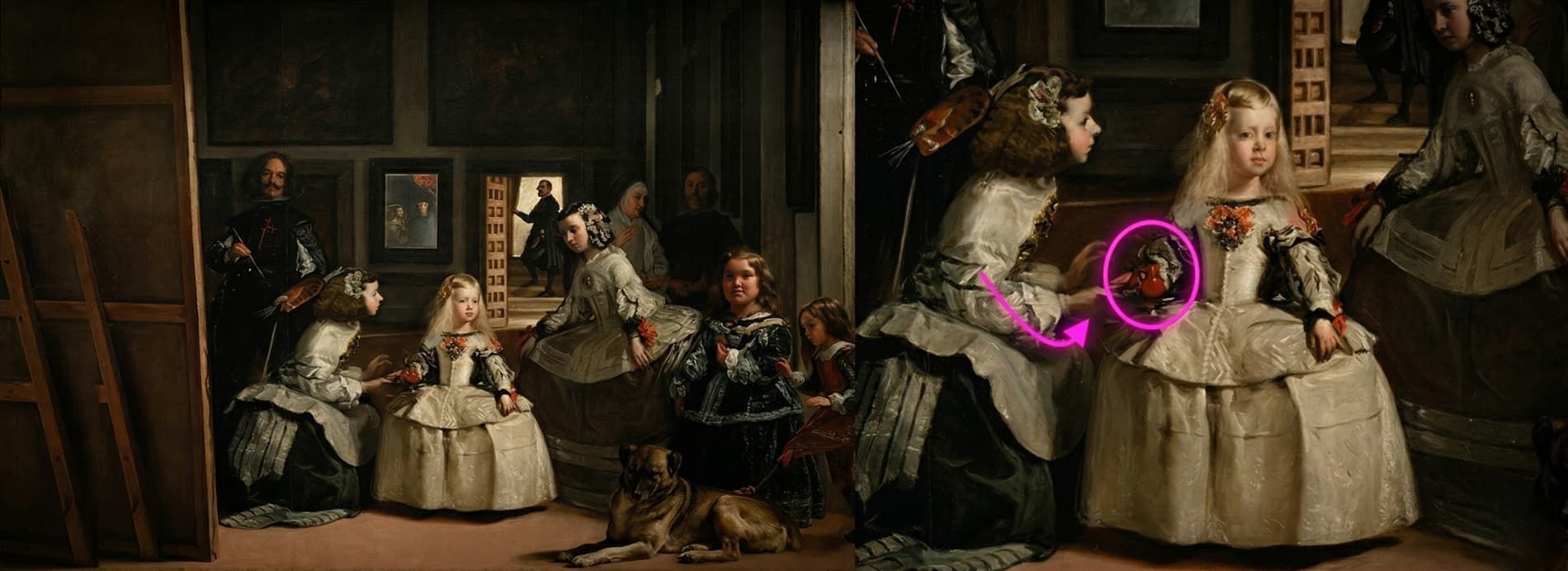
At the heart of our creation, Bucaro Royal, lies the very essence of Velázquez's masterpiece, "Las Meninas." We have delved into the history and significance of the búcaro, a vibrant symbol that captures the essence of a time and place. According to the renowned historian Byron Ellsworth Hamann, "The búcaro depicted in 'Las Meninas,' presented to the Infanta Margarita, is a ceramic piece originating from the New World. Its distinctive reddish hue not only sets it apart aesthetically but also symbolizes the influence of the Americas on 17th-century European art. Placed in the center of the royal chamber, the búcaro resonates with its history and meaning. It is more than just a vessel; it is a focal point representing the crossroads between the Old and New Worlds, between tradition and innovation."
In 17th-century aristocratic circles, the búcaro, besides being a vessel for perfuming the hands, was a symbol of status and refinement, a central piece in the culture and aesthetics of the time. Used as a fashionable object to perfume the hands and other parts of the body, the búcaro added a touch of elegance and refinement to its owners, enhancing the sensory experience of the royal court with its perfumed waters infused with aromatic substances such as flowers and herbs. This object not only served a practical function but also conveyed symbolic and allegorical messages that reflected the beliefs and values of the aristocratic society of the time. Furthermore, the búcaro was used to perfume the rooms of palaces and mansions, filling the air with exquisite fragrances and contributing to creating fragrant environments that added a touch of luxury and sophistication to the aristocratic homes of the 17th century.
In 17th-century aristocratic circles, the búcaro transcended its original function as a simple vessel for perfuming water, becoming a symbol of status and sophistication. The practice of biting the rim of the búcaro was considered fashionable, but it carried physical and psychological risks. It was believed that consuming búcaro clay would contribute to skin whitening, a desirable indicator of wealth. However, this could cause problems such as a reduction in red blood cells and muscle paralysis.
This connection to the búcaro (a type of earthenware jug) is evident in works of art such as "Las Meninas," where its presence in the hands of the Infanta Margarita invites us to reflect on the fleeting nature of life and the search for spiritual transcendence. Furthermore, its presence adds depth, revealing the complex intersections between fashion, status, health, and beauty during that era.
In 17th-century Spanish aristocratic circles, it became fashionable for girls and young women to gnaw on the rims of these porous clay jugs and devour them completely. This resulted in a dramatic lightening of the skin, considered an aesthetic aspiration and a sign of wealth.
Ingesting clay from a búcaro also carried risks, such as a reduction in red blood cells and muscle paralysis. When we consider these effects in "Las Meninas," the painting takes on a disquieting meaning, inviting us to meditate on the fleeting nature of life and the illusion of material identity. The altered consciousness of the Infanta, whose fingers encircle the búcaro (has she just nibbled on it?), suddenly expands from the epicenter of the action on the canvas to encompass the entire mentality of the painting. Furthermore, we can see that Velázquez's brush points to a patch of the same intense red on his palette, the very same one from which the búcaro originates.
Ghostly in her pallor, the Infanta also seems to levitate from the ground, an effect achieved by the shadow the artist casts beneath the hem of her dress in the shape of a parachute. Even the Infanta's parents, whose images float directly above the vase, begin to resemble holographic spirits projected from another dimension rather than mere reflections in a mirror. Suddenly, we see "Las Meninas" for what it is: not just a snapshot of a moment, but a meditation on the evanescence of the material world and the inevitable evaporation of the self.
Bucaro Royal received an Honorable Mention in the Best Independent Perfume category at the 11th Art and Olfaction Awards in 2025 held in Los Angeles.
50 ml - 145€
Erauso
Intensely smoky, bold, earthy, and slightly sweet
> Erauso
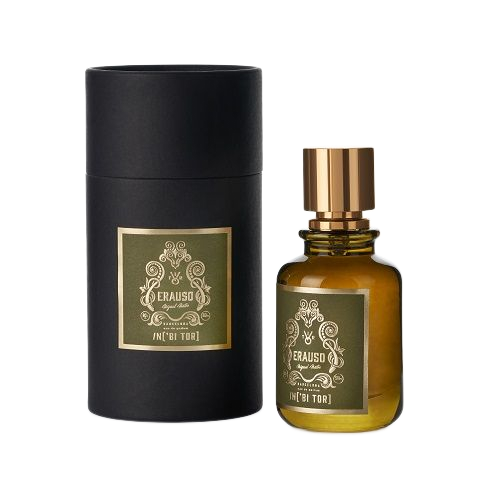
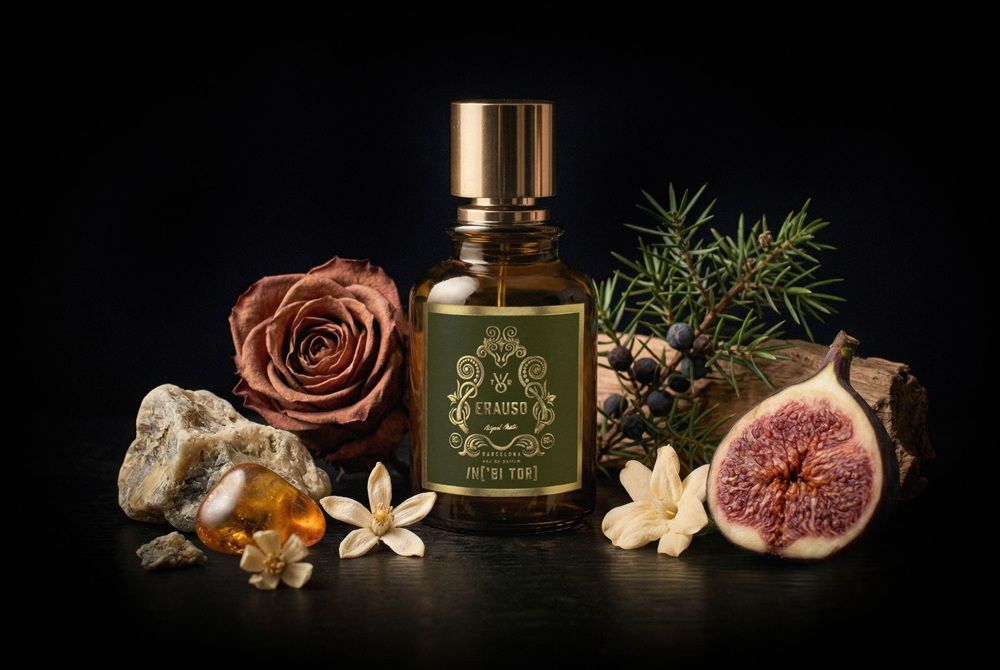
Erauso is a captivating perfume that transports you on a journey through the extraordinary life of Catalina de Erauso. It opens with a burst of vibrant energy, as if you were stepping into the lush landscapes of her homeland, with notes of ripe fig and the intensely smoky essence of cade oil, reminiscent of the fires and smoky battlefields she faced. The cade oil, with its earthy aroma nuanced with a touch of leather, evokes the rugged landscapes and the image of the leather garments and equipment worn by Catalina during her time as a soldier and adventurer.
As the fragrance unfolds, a bouquet of jasmine grandiflorum and roses emerges, symbolizing Catherine's femininity amidst her daring adventures. The air is tinged with the metallic edge of rose oxide, a reminder of swords and the battles she fought and the sacrifices she made. Beneath it all, a sense of warmth and sweetness lingers, infused with honey and raspberry, capturing moments of joy and laughter amidst the chaos of war.
At its base, rich, earthy notes of patchouli and Chinese cedar anchor the fragrance, while ambergris, reminiscent of Catalina's ocean voyages, adds depth and mystery, connecting her journey across the Atlantic to distant lands. Incense, reminiscent of her time in the convent preparing to become a nun, intertwines with the smoky elements, symbolizing both her spiritual quest and the battles she faced. "Erauso" is a fragrance of contrasts: bold yet delicate, robust yet refined, just like the extraordinary woman who inspired it. With every breath, it invites you to embrace your own courage and resilience and embark on your own daring adventure.
Olfactory notes
Top notes: Fig, Cade Oil.
Heart notes: Jasmine grandiflorum, rose, rose oxide, neroli oxide, raspberry.
Base notes: Patchouli, amber, ambergris, incense, Chinese cedar, honey.
Nose: Miguel Matos.
> Description
Erauso is a captivating perfume that transports you on a journey through the extraordinary life of Catalina de Erauso. It opens with a burst of vibrant energy, as if you were stepping into the lush landscapes of her homeland, with notes of ripe fig and the intensely smoky essence of cade oil, reminiscent of the fires and smoky battlefields she faced. The cade oil, with its earthy aroma nuanced with a touch of leather, evokes the rugged landscapes and the image of the leather garments and equipment worn by Catalina during her time as a soldier and adventurer.
As the fragrance unfolds, a bouquet of jasmine grandiflorum and roses emerges, symbolizing Catherine's femininity amidst her daring adventures. The air is tinged with the metallic edge of rose oxide, a reminder of swords and the battles she fought and the sacrifices she made. Beneath it all, a sense of warmth and sweetness lingers, infused with honey and raspberry, capturing moments of joy and laughter amidst the chaos of war.
At its base, rich, earthy notes of patchouli and Chinese cedar anchor the fragrance, while ambergris, reminiscent of Catalina's ocean voyages, adds depth and mystery, connecting her journey across the Atlantic to distant lands. Incense, reminiscent of her time in the convent preparing to become a nun, intertwines with the smoky elements, symbolizing both her spiritual quest and the battles she faced. "Erauso" is a fragrance of contrasts: bold yet delicate, robust yet refined, just like the extraordinary woman who inspired it. With every breath, it invites you to embrace your own courage and resilience and embark on your own daring adventure.
Catalina de Erauso, the novice who exchanged her coif for a helmet and sword.
Novice, cloistered nun, soldier, virgin and near-martyr, rebellious, passionate, disguised as a man for most of her life, Catalina de Erauso, better known as the Lieutenant Nun, is one of the most controversial and exceptional figures of the Spanish Golden Age. Catalina de Erauso, also known as the "Lieutenant Nun," was a fascinating and unconventional figure in the 17th century.
One of the earliest known autobiographies by a woman, this extraordinary account is known as "The Lieutenant Nun: Memoirs of a Basque Transvestite in the New World." These memoirs detail her exploits, struggles, and the challenges she faced as a woman living as a man in an era dominated by rigid gender roles.
Born in 1592 in San Sebastián, Spain, Catalina de Erauso's life was marked by a series of extraordinary events and a rejection of societal norms. At the age of four, after her mother's death, Catalina was abandoned and raised in a Dominican convent.
On March 18, 1600, at the age of 15, Catherine, seeking a different life, fashioned a man's suit from her convent clothes and ran away from the convent. Dressed as a man, she adopted the name Francisco Loyola, began her life as a man, and embarked on a journey that took her to various places, including South America and Mexico.
Her life as a transvestite adventurer led her to participate in various duels, perform military service, and even serve as a soldier in the Spanish viceroyalties. Despite her disguise, she rose through the ranks to become a lieutenant.
Her life is often considered a testament to her courage, resourcefulness, and ability to navigate a male-dominated world. The story of Catalina de Erauso challenges conventional notions of gender identity and societal expectations, making her a remarkable historical figure who defied norms and forged her own path in an era of rigid societal rules.
When she returned to Spain, her fame had already spread across the Atlantic, and, aware of Catalina's lifestyle, she was sent to Madrid in 1625 to meet with the King of Spain. Incredibly, King Philip IV granted her a lifetime pension for all her remarkable services to the Crown. Catalina also traveled to Rome, where she met with Pope Urban VIII and told him about her life, travels, and adventures. She explained that she was biologically a woman and a virgin, and, recognizing her unique lifestyle, he granted her permission to continue dressing as a man and maintaining her nomadic way of life.
50 ml - 145€
Hombre de Palo
Green, fresh, uplifting | Herbal Woody Green

> Hombre de Palo
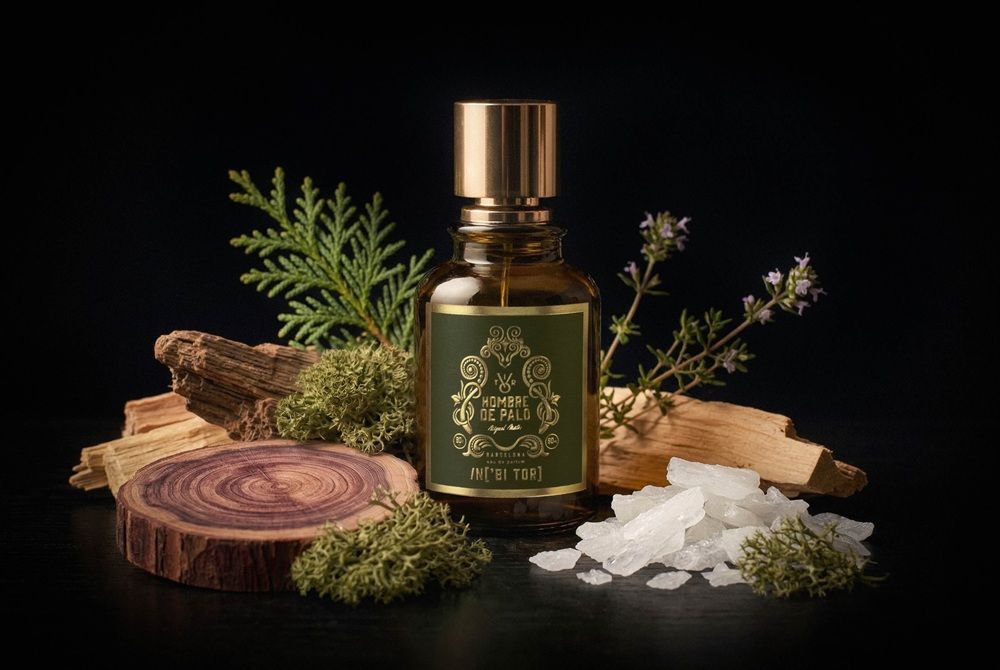
Hombre de Palo is a robustly herbal, woody, resinous, metallic, and animalic fragrance. Its green-herbal character comes from its top note of thyme and its base of oakmoss. Thyme has an intense herbal scent reminiscent of the Mediterranean mountains, with spicy nuances and notes of clove, camphor, and mint. In contrast, the oakmoss note evokes a green forest scent with its earthy, damp, and salty undertones. Oakmoss is a lichen (a symbiotic relationship between a fungus and an alga).
The woody note of Hombre de Palo comes from several types of wood: Hinoki, Atlas Cedar, Oak, and Rosewood. Hinoki, which means white cedar in Japan, has a woody aroma with lemony undertones. Its wonderful scent is fantastic for uplifting spiritual awareness and emotions. In ancient times, Hinoki was used to refresh the soul, calm the mind, and relax the body. Atlas Cedar is a warm, sweet, balsamic, slightly floral, rich, and complex wood. Cedar always produces an aroma reminiscent of the outdoors, while Oak is characterized by notes of vanilla, clove, coconut, spices, and leather, as well as earthy and vegetal undertones. Rosewood gives Hombre de Palo a lively, citrusy aroma with a smoky touch. Finally, Geosmin gives us a petrichor scent (the smell of wet earth) and Costus gives us that animalic note that resembles the smell of goats, which reminds us so much of the smell of the horses that always participate in Corpus Christi and those characteristic aromas of the Middle Ages.
The Hombre de Palo perfume is an olfactory representation of a fusion between the figure of the Hombre de Palo and the Corpus Christi of Toledo.
Olfactory notes
Top notes: Thyme, Camphor.
Heart notes: Rosewood, Hinoki.
Base notes: Myrrh, Oakwood, Oakmoss, Geosmin, Atlas Cedar, Costus.
Nose: Miguel Matos.
> Description
Hombre de Palo is a robustly herbal, woody, resinous, metallic, and animalic fragrance. Its green-herbal character comes from its top note of thyme and its base of oakmoss. Thyme has an intense herbal scent reminiscent of the Mediterranean mountains, with spicy nuances and notes of clove, camphor, and mint. In contrast, the oakmoss note evokes a green forest scent with its earthy, damp, and salty undertones. Oakmoss is a lichen (a symbiotic relationship between a fungus and an alga).
The woody note of Hombre de Palo comes from several types of wood: Hinoki, Atlas Cedar, Oak, and Rosewood. Hinoki, which means white cedar in Japan, has a woody aroma with lemony undertones. Its wonderful scent is fantastic for uplifting spiritual awareness and emotions. In ancient times, Hinoki was used to refresh the soul, calm the mind, and relax the body. Atlas Cedar is a warm, sweet, balsamic, slightly floral, rich, and complex wood. Cedar always produces an aroma reminiscent of the outdoors, while Oak is characterized by notes of vanilla, clove, coconut, spices, and leather, as well as earthy and vegetal undertones. Rosewood gives Hombre de Palo a lively, citrusy aroma with a smoky touch. Finally, Geosmin gives us a petrichor scent (the smell of wet earth) and Costus gives us that animalic note that resembles the smell of goats, which reminds us so much of the smell of the horses that always participate in Corpus Christi and those characteristic aromas of the Middle Ages.
The Hombre de Palo perfume is an olfactory representation of a fusion between the figure of the Hombre de Palo and the Corpus Christi of Toledo.
On one of Toledo's most central streets, a popular destination for tourists from around the world, lies a street with a rather curious name: Hombre de Palo (Wooden Man). The street's name comes from a remarkable 40-centimeter-tall automaton equipped with sophisticated clockwork mechanisms. It was the first automaton ever created and was built in the 16th century. The automaton depicted a Franciscan monk who walked in various directions, moved his head and eyes, opened his mouth, and moved his arms in the gesture of presenting a crucifix, begging for alms for his creator in exchange for being seen moving. Hombre de Palo was the invention of Juanelo Turriano.
Juanelo Turriano was the engineer, architect, and royal clockmaker of Philip II, and the church was built during the time when Toledo was the capital of Spain. A large part of the Corpus Christi procession, celebrated since 1247, passes through this same street, its air always filled with the aromas of myrrh, thyme, rosemary, and wood.
50 ml - 145€
Laban Arruz
Rice pudding | Gourmand
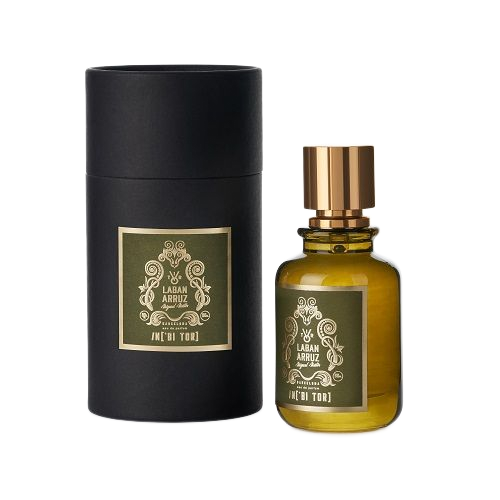
> Laban Arruz
nBitor reveals a historical sweetness transformed into fragrance: the most endearing dessert made into perfume…with a few unexpected twists.
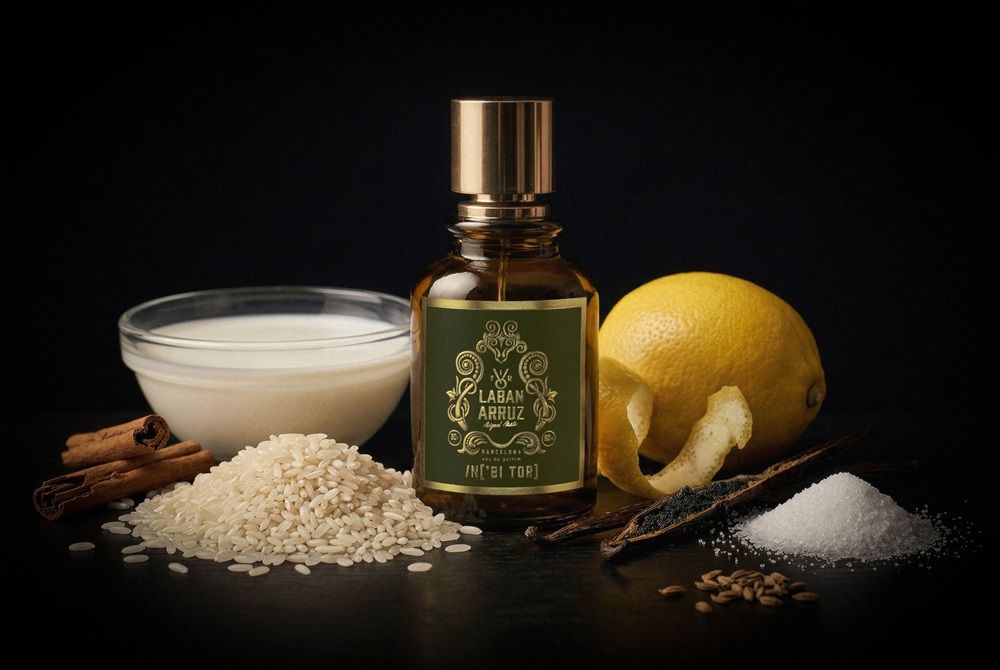
Laban Arruz is born from the most cherished recipe in Spanish memory: rice pudding. Milk cooked patiently, short-grain rice, a cinnamon stick, and fresh lemon peel, all balanced with a touch of brown sugar and vanilla. Sometimes, the smoothness of cream, the floral whisper of rose or orange blossom water, and a veil of butter add an unexpected brilliance, like variations on the same melody.
This perfume pays homage to one of Spain's most beloved desserts, whose first written recipe dates back to the 17th century. Four hundred years later, that humble yet festive delicacy continues to perfume kitchens and memories, now transformed into an olfactory language.
Its name comes from Arabic (laban arruz, “milk with rice”), recalling the legacy of Al-Andalus, when rice, citrus fruits and spices arrived on the peninsula to transform our table… and our memory.
Laban Arruz is sweetness, tradition and emotion served in a unique fragrance.
Olfactory notes
Notes: Rice, sugar, vanilla, milk, lemon, cinnamon, musk, nuts, tonka bean, sandalwood, carrot seeds, patchouli, chocolate, civet.
Nose: Miguel Matos.
> Description
A gourmand perfume that tells a millennia-old story of cultural fusion, sweetness, and memory. Laban Arruz is a fragrant ode to one of the most cherished flavors in Spanish memory: rice pudding. But this is neither a complacent nor merely nostalgic fragrance. Like all our creations at nbitor, Laban Arruz explores the boundaries of the known, transforming the everyday into art, and taste into olfactory language.
This perfume is crafted like an Andalusian alchemist: with patience, mastery, and a deep respect for history. Its creamy heart, enveloped in spiced, milky notes, evokes the aromas that filled the convent kitchens of Castile and the stately homes of southern Spain, where rice pudding became a symbol of hospitality, sweetness, and cultural heritage.
The name—Laban Arruz—comes from the Arabic اللبن الأرز, literally “rice milk.” During the splendor of Al-Andalus, rice was introduced from Asia throughout the Islamic world, finding fertile ground in the Iberian Peninsula to take root. Along with it came cinnamon, citrus fruits, rosewater, and the art of spiced, complex, and aromatic pastry making. Thus was born the precursor to our rice pudding.
But it was in Spain where this recipe was transformed. After the Reconquista, the dessert was adopted by convents, stately homes, and humble families. Cane sugar, brought from the Americas, was added, and cow's milk—softer and creamier—replaced the traditional milks of the Arab world. Slow cooking was perfected in monasteries, and in Asturias, the version with a caramelized crust was created, now considered a jewel of regional gastronomy.
Rice pudding wouldn't be what it is without cinnamon, brought from the East through the Arab world, a sacred spice to the Greeks and Romans, and a symbol of status in the Middle Ages. Nor would it be without cane sugar, which, after centuries of cultivation in Al-Andalus, was replaced by the massive influx of sugar from the New World. Rice, originating in Asia and spread by Islam, found ideal conditions in the Iberian Peninsula's eastern plains. And milk, once sheep or goat's milk, became softer and richer with the expansion of cattle farming. This dessert is, quite literally, the sum of the ancient world in a spoon.
And throughout this sensory journey, one ingredient endures as a signature note: lemon peel. Present from the earliest convent kitchens to 21st-century family kitchens, its fresh, subtly acidic aroma lends the dish an ethereal lightness, a ray of sunshine that balances the rich, creamy flavor. At Laban Arruz, this citrus note is much more than a nuance: it's a burst of Mediterranean memory.
The first written recipe for rice pudding in Castilian Spanish appears in the 17th century, specifically in the Libro de Arte de Cozina (1607), a work by the cook Domingo Hernández de Maceras, who recorded it as a humble and nutritious dish. However, all indications are that rice pudding had been prepared in Spain at least since the 13th century, adapting and evolving over the centuries to become one of the most emblematic desserts of Hispanic tradition.
Thus, what began as an oriental dish became a symbol of the Spanish soul. And that historical, sensory, and emotional journey is what we wanted to capture in Laban Arruz.
This gourmand fragrance awakens not only desire, but emotion. Like a spoonful of warm rice pudding in winter, or the memory of a grandmother perfuming the home with cinnamon, lemon peel, and patience, Laban Arruz is the perfume of collective childhood, reinterpreted for lovers of art, history, and boundless beauty.
"At the heart of Laban Arruz resides this aroma: milk cooked with patience, tender rice, warm cinnamon, and the sun-kissed freshness of lemon peel. This recipe is not an addendum to the perfume—it is its secret origin."
From aroma to palate
Laban Arruz is more than a fragrance: it's a memory reborn. At its heart beats arroz con leche, that tender Spanish dessert where milk, rice, cinnamon, and lemon zest meet in a harmony of patience and sweetness. What we've captured in aroma, you can also bring to life in your own kitchen.
Preparing rice pudding is like stirring centuries of history into a single pot. The first written recipe in Spanish appears at the beginning of the 17th century in Domingo Hernández de Maceras's *Libro de Arte de Cozina* (Book of the Art of Cooking), although the dessert was already being enjoyed in homes long before it was written down. Each ingredient holds within it the warmth of convent kitchens, the refinement of stately homes, and the simple devotion of family tables. It is a recipe where time itself becomes an ingredient, transforming the everyday into the eternal.
Here we share with you not just a recipe, but a story you can savor. Follow the steps and discover how a humble spoonful of rice and milk can hold the fragrance of memory, the poetry of the Mediterranean, and the sweetness of love passed down through generations.
50 ml - 145€
Nuevalos
Gourmand marino
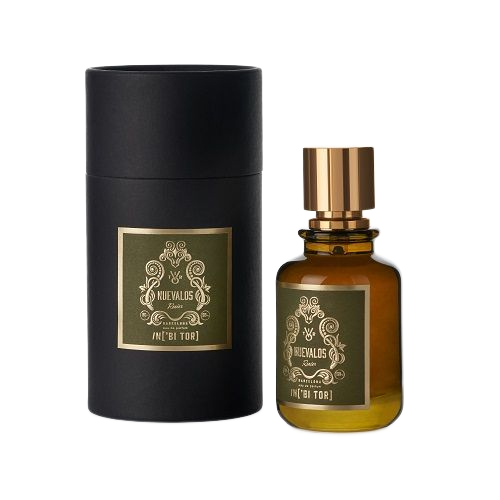
> Nuevalos
Nuevalos is an unprecedented gourmand–marine perfume: a meeting between salt and cocoa, between ocean wind and sacred warmth, between the unknown and the irresistible.
This fragrance is born from the age of great crossings — a time when the world was not yet whole, when oceans were borders and ships were fragile ideas pushed forward by courage, ambition, and faith.
In the early 16th century, Spanish vessels crossed the Atlantic as part of an expanding network of exploration and exchange. These journeys initiated profound transformations in trade, culture, and material knowledge between Europe and the Americas.
Nuevalos, the perfume, draws its inspiration from this moment of passage. This is not a sweet chocolate fragrance. Nuevalos does not seek to recreate dessert or indulgence, but rather the maritime journey itself — the weeks of Atlantic navigation, the salt-laden air, the wooden hulls, and the humid holds where cocoa traveled for the first time toward Europe.
Cocoa here appears in its raw and original character: dry, slightly bitter, textured, and deep, intertwined with a marine accord evoking open sea and distant horizons.
The cocoa used in Nuevalos is not a synthetic reconstruction. It is derived from real cocoa material, carefully processed to preserve its natural complexity, allowing it to interact authentically with mineral and saline notes.
Olfactory notes
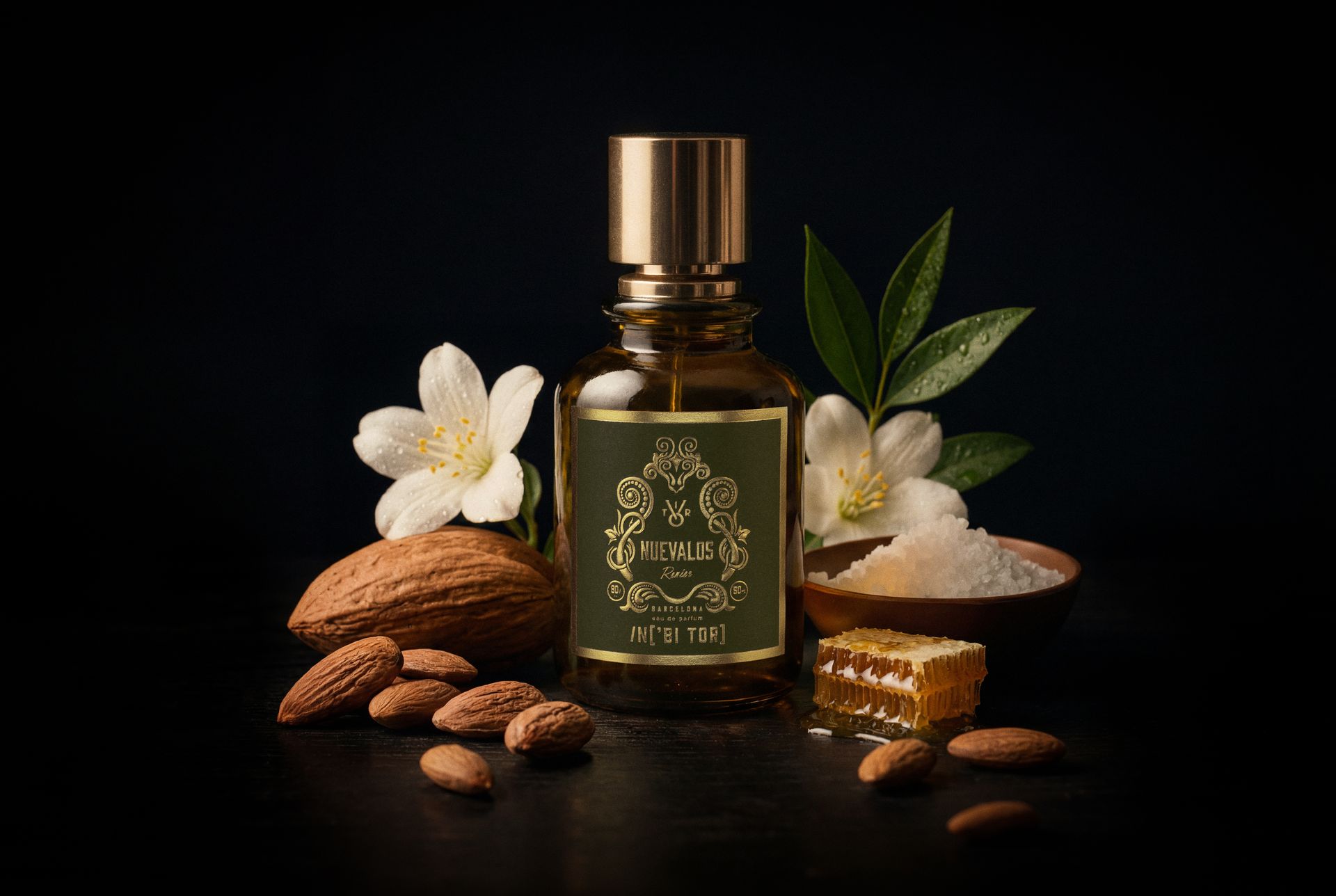
Top notes: Bergamot, Ozone, Honey, Jasmine.
Heart notes: Sandalwood, Oud, Cocoa, Salt.
Base notes: Oakmoss, Benzoin, Opoponax, Labdanum, Musks.
Nose: Renier R. Mendez.
> Description
Nuevalos is an unprecedented gourmand–marine perfume: a meeting between salt and cocoa, between ocean wind and sacred warmth, between the unknown and the irresistible.
This fragrance is born from the age of great crossings — a time when the world was not yet whole, when oceans were borders and ships were fragile ideas pushed forward by courage, ambition, and faith.
In the early 16th century, Spanish vessels crossed the Atlantic as part of an expanding network of exploration and exchange. These journeys initiated profound transformations in trade, culture, and material knowledge between Europe and the Americas.
Among those explorers was Hernán Cortés, who in 1524 sent to Spain the first documented shipment of cocoa beans from the Americas. In the great cities of the Aztec and Mayan worlds, cocoa was not merely nourishment — it was ritual, power, and currency. Consumed as a cold, bitter, spiced beverage, cocoa held deep ritual and military significance. Reserved for nobles, priests, and warriors, it was taken before battle or long marches. It was believed to sharpen focus and sustain physical endurance. Contemporary accounts describe a single serving as sufficient to maintain strength throughout an entire day.
Cortés understood immediately that this dark seed carried something extraordinary. Although the Spanish did not adopt cocoa for military use as it had been in Mesoamerican societies, he recognized its sustaining qualities, symbolic power, and economic potential. He presented it to Emperor Carlos I not as a curiosity, but as a substance of energy, mystery, and prestige, worthy of courts and crowns.
Through a chain of faith and knowledge, cocoa reached a quiet and unexpected place: the Monasterio de Piedra, in the village of Nuevalos, in the province of Zaragoza — a location that would become inseparable from its early European history.
It was there, behind stone walls and silence, that history gently shifted. Guided by Fray Jerónimo de Aguilar, monks worked with the foreign bean, softening its bitterness with cane sugar — two substances born of distant lands that had never encountered one another before. One had traveled from the civilizations of the Americas; the other from centuries of Mediterranean and Arab knowledge. Their union marked one of the earliest moments in which separate worlds met through taste.
What had once been austere and ceremonial became warmer and more accessible. A ritual drink slowly began its transformation, destined to move beyond monasteries and courts.
Nuevalos, the perfume, draws its inspiration from this moment of passage. This is not a sweet chocolate fragrance. Nuevalos does not seek to recreate dessert or indulgence, but rather the maritime journey itself — the weeks of Atlantic navigation, the salt-laden air, the wooden hulls, and the humid holds where cocoa traveled for the first time toward Europe.
Cocoa here appears in its raw and original character: dry, slightly bitter, textured, and deep, intertwined with a marine accord evoking open sea and distant horizons.
The cocoa used in Nuevalos is not a synthetic reconstruction. It is derived from real cocoa material, carefully processed to preserve its natural complexity, allowing it to interact authentically with mineral and saline notes.
The cultivation and consumption of cocoa would later grant it
social,
religious,
medicinal,
political, and
economic relevance across countless societies. Its expansion would involve
millions of people and
numerous nations, shaping
global culture in ways that continue
to this day.
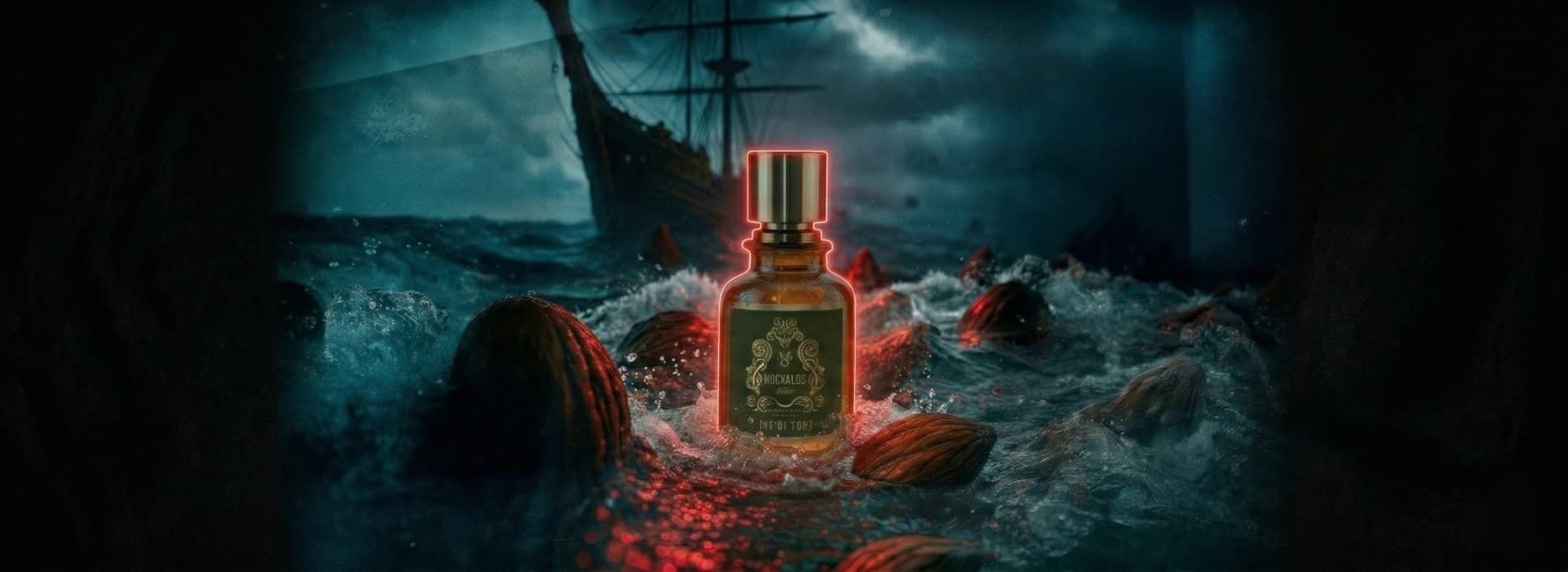
Nuevalos, the perfume, draws its inspiration from this moment of passage. This is not a sweet chocolate fragrance. Nuevalos does not seek to recreate dessert or indulgence, but rather the maritime journey itself — the weeks of Atlantic navigation, the salt-laden air, the wooden hulls, and the humid holds where cocoa traveled for the first time toward Europe.
Cocoa here appears in its raw and original character: dry, slightly bitter, textured, and deep, intertwined with a marine accord evoking open sea and distant horizons.
The cocoa used in Nuevalos is not a synthetic reconstruction. It is derived from real cocoa material, carefully processed to preserve its natural complexity, allowing it to interact authentically with mineral and saline notes.
The cultivation and consumption of cocoa would later grant it social, religious, medicinal, political, and economic relevance across countless societies. Its expansion would involve millions of people and numerous nations, shaping global culture in ways that continue to this day.
50 ml - 145€
Ocaña
Floral, intense, radical | Orange Blossom - animalic
> Ocaña
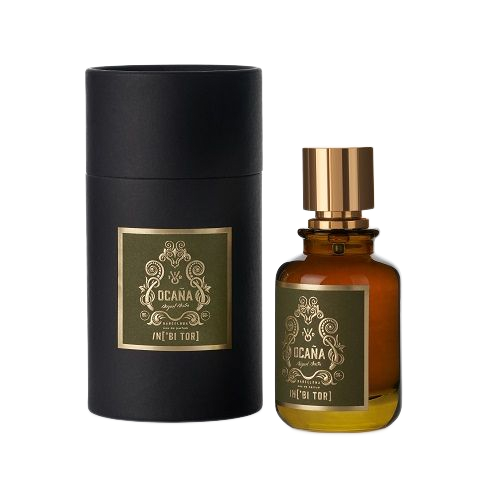
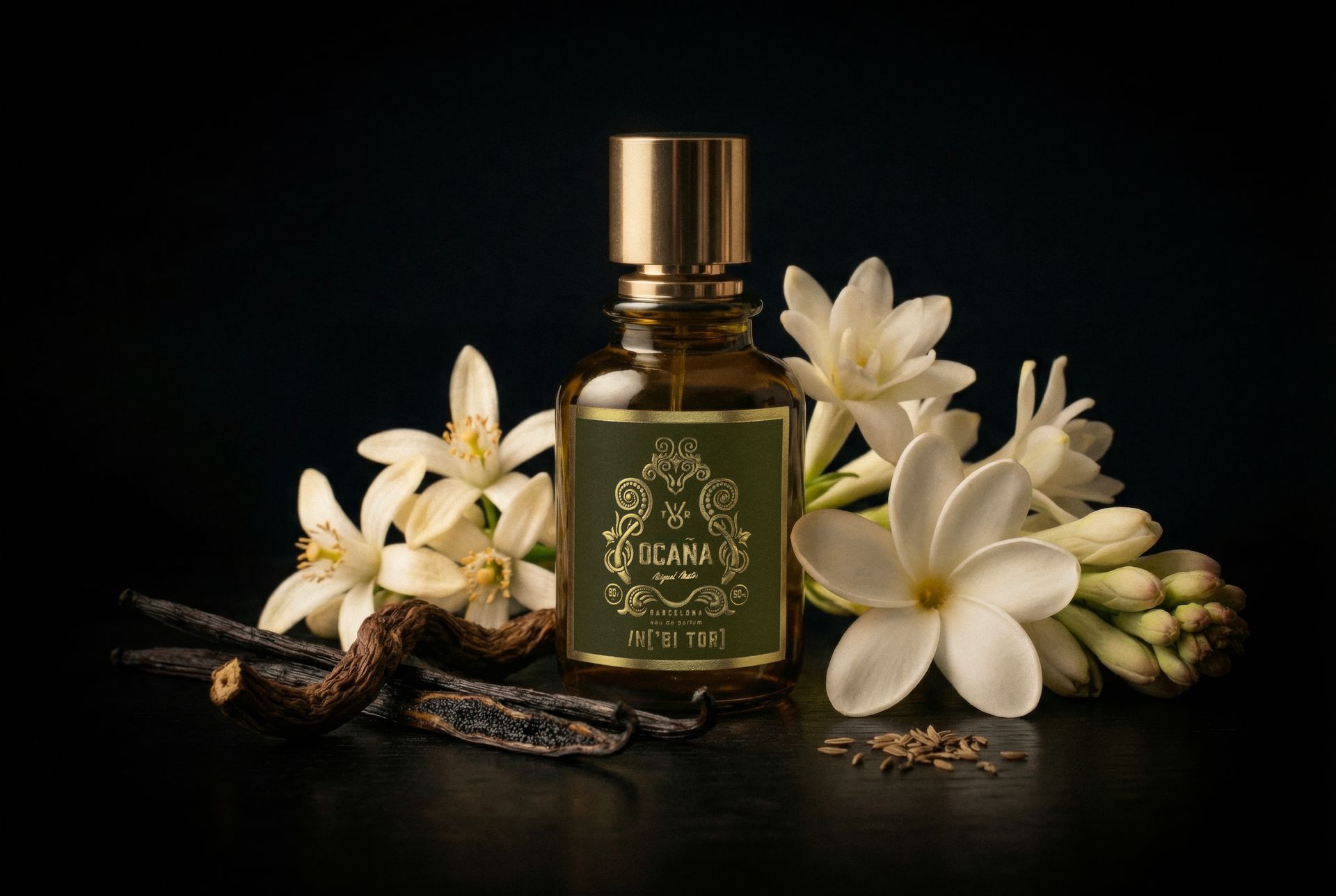
Ocaña is a penetrating, sweet, vintage, and incredibly cosmopolitan fragrance. Its sweetness comes from the combination of floral notes such as orange blossom, tuberose, and tiare flower, and notes of vanilla, tonka bean, and benzoin resin.
The Tiare flower, or "Gardenia tahitensis," originates from French Polynesia and is undeniably tropical. Like a white floral, it evokes the scent of tuberose and gardenia, but with a slightly creamy undertone, almost like coconut, lending a very exotic touch to the fragrance. Meanwhile, its notes of carrot seed, tobacco, and yerba mate offer a woody, earthy, and toasted element that makes Ocaña also very warm and inviting.
But the notes that make Ocaña such an unusual, bold, and incredibly radical white flower perfume are cumin and costus. Cumin gives Ocaña that touch of aged sweat, and costus provides that goat-like note.
Ocaña received an Honorable Mention in the category of best independent perfume at the 10th Art and Olfaction Awards in 2024 held in Los Angeles.
Olfactory notes
Top notes: Orange blossom, Cumin
Heart notes: Tuberose, Tiare, Carrot Seed, Tobacco, Mate Tea
Base notes: Siamese benzoin, vanilla, musk, ambergris, tonka bean, costus
Nose: Miguel Matos.
> Description
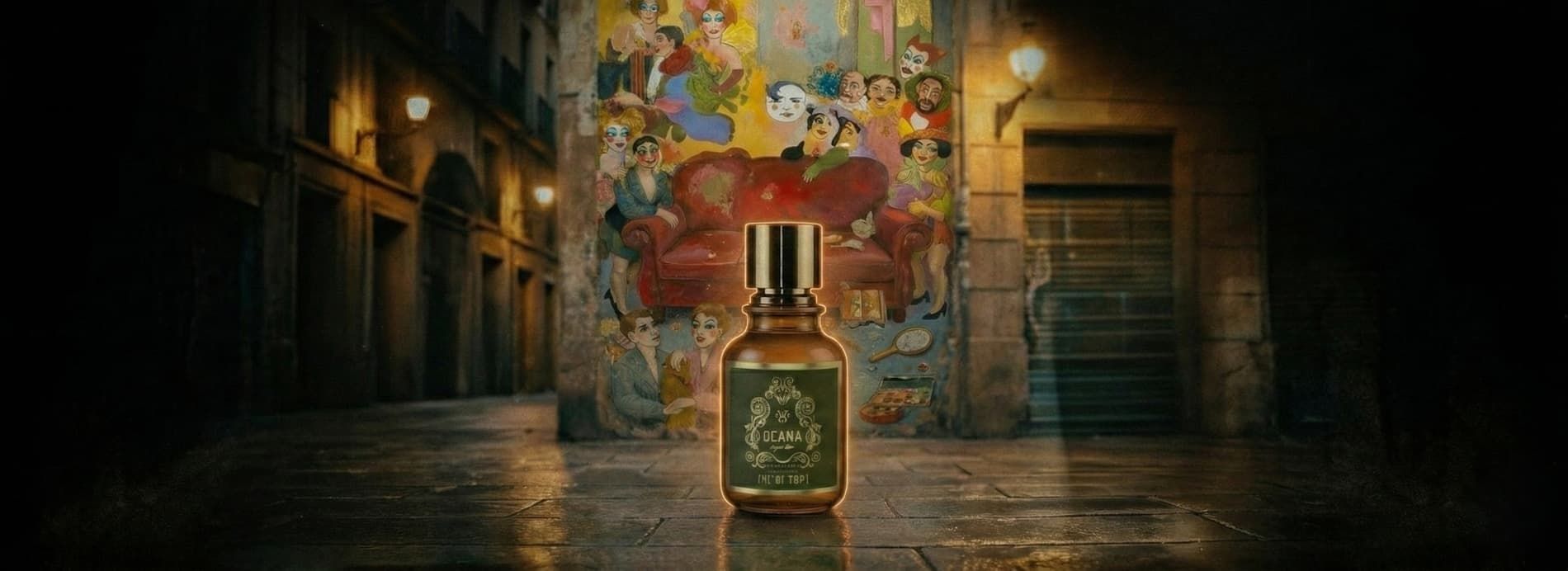
Ocaña perfume is a fragrance of white flowers where the star is the orange blossom – a flower very characteristic and representative of Seville. Ocaña is a tribute to José Pérez Ocaña. Born in Cantillana, Seville in 1947, he moved to Barcelona in 1971 where he developed his artistic career. There he lived in the Plaça Reial. He was an icon of resistance to the Franco dictatorship during the Spanish transition to democracy.
He is one of the key figures forgotten by Spanish art history. His various performances and actions, contemporaneous with the birth of the punk movement and the first protest movements, foreshadowed the practices of sexual and gender disobedience that began to be grouped under the name of "queer activism" in the early 1980s. He was a typical character on Las Ramblas, cross-dressing without shame in broad daylight with a blend of Andalusian identity and religiosity typical of his region, and lived surrounded by those who loved and understood him.
Thanks to figures like José Pérez Ocaña, Spain is considered one of the most culturally liberal and respectful countries towards the LGBT community in the world.
Ocaña received an Honorable Mention in the category of best independent perfume at the 10th Art and Olfaction Awards in 2024 held in Los Angeles.
50 ml - 150€
Orbis Iberica
Oriental spiced

> Orbis Iberica
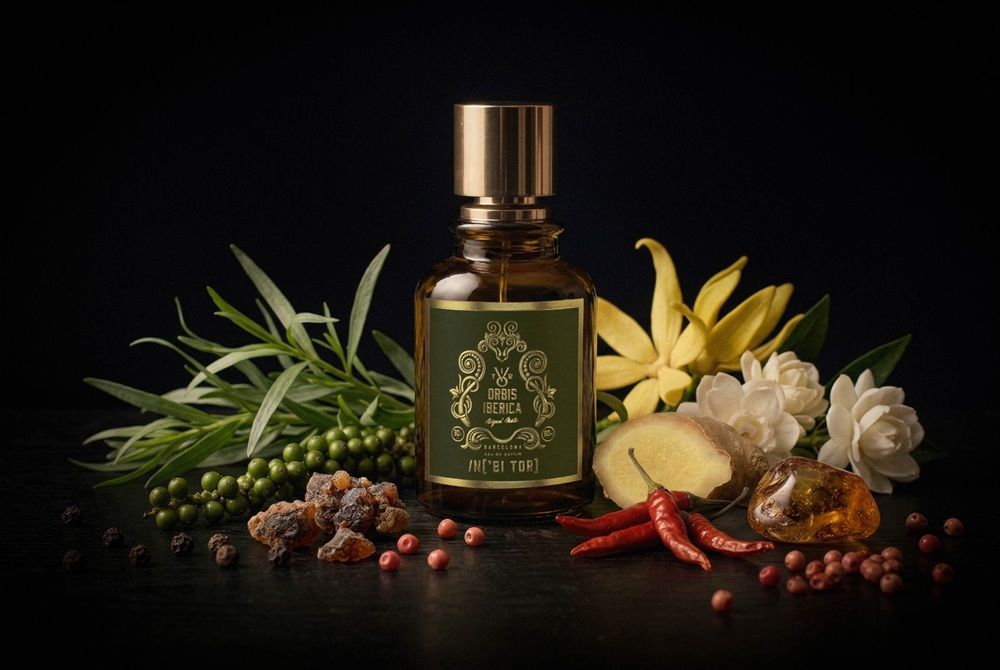
The fragrance opens with the vibrancy of the spice route. Paraguayan petitgrain evokes the orange groves of the New World; a trio of peppers—green, pink, and black—recalls the coveted exports of Asia; cardamom and ginger bring the warmth of Indian and Southeast Asian markets. Tarragon bursts forth with a sharp, unexpected, green, and aniseed note, like an unfamiliar flavor discovered in a bustling port. It is a bright and fiery opening, the scent of sails billowing in the wind.
The heart becomes exuberant and sensual. Piri-piri blazes with African heat; ylang-ylang from the Philippines blossoms creamy and tropical; jasmine sambac absolute from India offers opulence and depth; while coconut softens the accord with a sun-kissed sweetness that evokes tropical shores. They are the treasures of foreign ports, the whispers of distant gardens and markets carried in wooden chests across oceans.
The base is where the fragrance takes root. Myrrh, resinous and sacred, links Europe, Africa, and Asia in a ritual continuity. Patchouli evokes the fertile soils of the Orient, once used to wrap the finest fabrics and preserve their aroma. Vanilla from Mexico and tonka bean from South America contribute sweetness and warmth, while leather anchors the composition in the rough materiality of the ships themselves. Finally, amber and ambergris—one luminous and resinous, the other rare and oceanic—complete the journey, binding the perfume to the sea, to the waves that carried both danger and fortune.
Olfactory notes
Top notes: Paraguayan petitgrain, green pepper, pink pepper, black pepper, cardamom, ginger, tarragon.
Heart notes: Piri-piri, ylang-ylang, jasmine sambac, coconut.
Base notes: Amber, myrrh, patchouli, vanilla, tonka bean, ambergris, leather.
Nose: Miguel Matos.
> Description
The first globalization, distilled into aroma
Orbis Iberica was born from an extraordinary and decisive moment in Iberian history: the Iberian Union (1580–1640) and the Manila Galleons, which, for more than two centuries, linked Asia, America, and Europe. In that brief but transformative chapter, the crowns of Spain and Portugal were intertwined under a single monarch. For the first and only time, two hemispheres previously conceived as separate worlds united in a shared vision: Spain presiding over the Western world, while Portugal safeguarded the routes to the East.
Lisbon, Seville, Cádiz, Goa, and Manila became epicenters of a world in perpetual motion. Spain positioned itself at the very heart of this network, transforming its ports into crossroads where continents converged. Historians consider this era the first true example of globalization: a time when oceans ceased to divide and became channels of exchange. For the first time, the world was experienced as an interconnected whole.
This fragrance is an olfactory meditation on that transformation. It reimagines the Manila Galleons not as mere trading vessels, but as carriers of worlds: of silks and silver, but also of flowers, spices, flavors, and essences that forever transformed the European imagination. Orbis Iberica is not a literal reconstruction of the past, but a poetic distillation of its essence: the collision of continents, the turbulence of the voyages, the sensuality of the exchange, all seen through the Spanish lens that made those encounters possible.
Legacy
Orbis Iberica is conceived as both a tribute and a reflection. It celebrates not conquest, but exchange: the intertwining of rituals, the migration of plants and flavors, the blending of knowledge and arts. It asks how perfume, the distillation of essences, can reflect the cultural distillations that marked that first globalization.
Each note is more than just a scent: it's a fragment of history. The sweetness of the Americas, the fire of Africa, the sensuality of Asia, the ritual of Europe, and the salt of the ocean. Together they form a composition that belongs not to a single geography, but to the shared legacy of them all.
The world, for the first time, as one.
50 ml - 145€
Santalla
Fresh, dynamic, energetic, spicy | Aromatic citrus
> Santalla
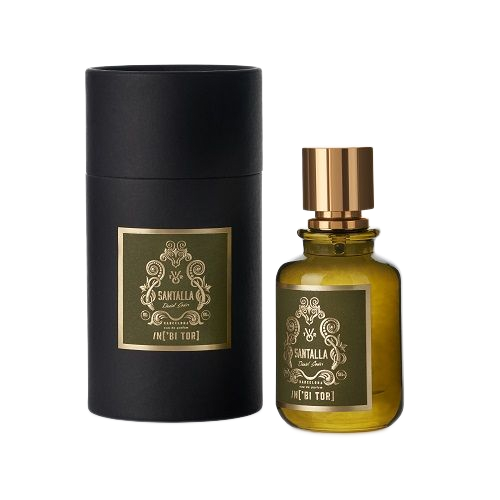
Santalla is born where Mediterranean light meets inner calm. It is dedicated to Saint Eulalia, the ancient patron saint of Barcelona and one of the earliest spiritual figures in the history of Hispania.
The fragrance opens with Mediterranean clarity. Bergamot and lemon bring a radiant freshness, almost solar in character, while green apple introduces transparency and vitality. Ginger cuts through the opening with immediate energy, echoing the dynamic spirit of the city.
As time unfolds, Santalla turns inward. Cardamom adds warmth, incense reappears with restraint and elegance — never dark, but softly illuminated — merging with sandalwood and vetiver to create a calmer, introspective depth.
Olfactory notes
Top notes: Lemon, green apple, bergamot, pink peppercorns, cardamom.
Heart notes: Jasmine, ginger, patchouli, incense, violet petals.
Base notes: Teak wood, sandalwood, vetiver.
Nose: Daniel Josier.
> Description
Santalla is born where Mediterranean light meets inner calm.
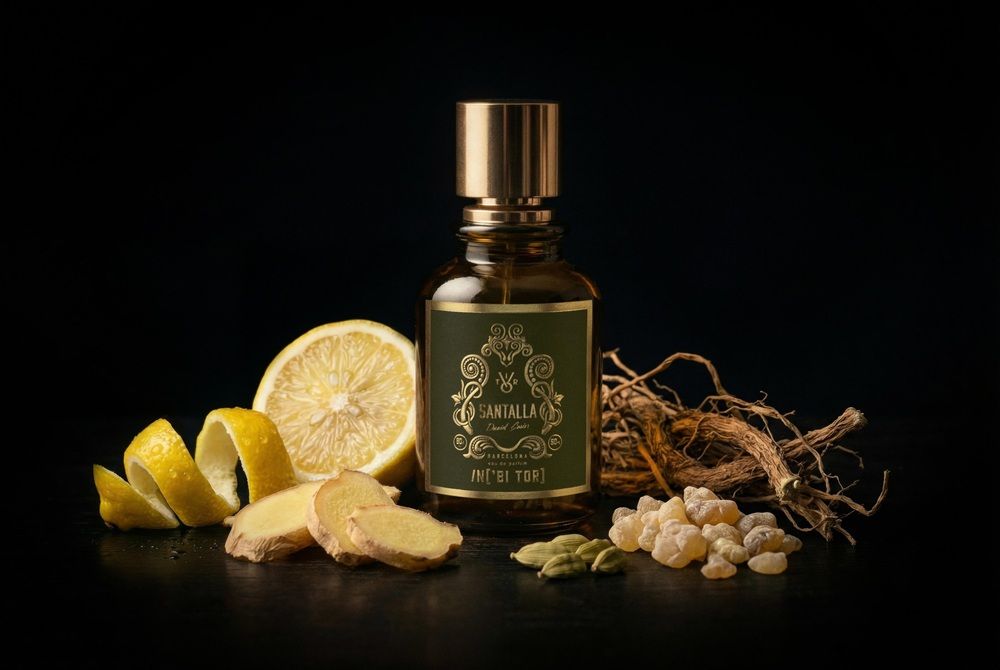
It is dedicated to Saint Eulalia, the ancient patron saint of Barcelona and one of the earliest spiritual figures in the history of Hispania. Born at the end of the 3rd century in Roman Barcino, Eulalia lived at a time when Christianity was still persecuted by the Roman Empire. At only thirteen years of age, she stood before imperial authority during the persecutions ordered by Emperor Diocletian, becoming a symbol of inner conviction, moral strength and spiritual freedom.
Her martyrdom left a lasting imprint on the memory of the city. Centuries later, in the year 877, during the formation of the early medieval Christian territories, her remains were solemnly transferred to Barcelona’s Cathedral. Since then, her memory has remained guarded by stone, silence and living tradition. In the cloister, thirteen living geese recall her age and sustain a ritual where faith, memory and place continue to coexist — still perceptible today to those who walk quietly through the Cathedral of Barcelona.
Santalla does not interpret religion as doctrine, but as cultural heritage. The incense within its composition evokes the presence of Christianity in the history of Spain, while simultaneously recalling the ancient origins of perfumery itself — born from smoke, ritual and the human desire to communicate with the invisible.
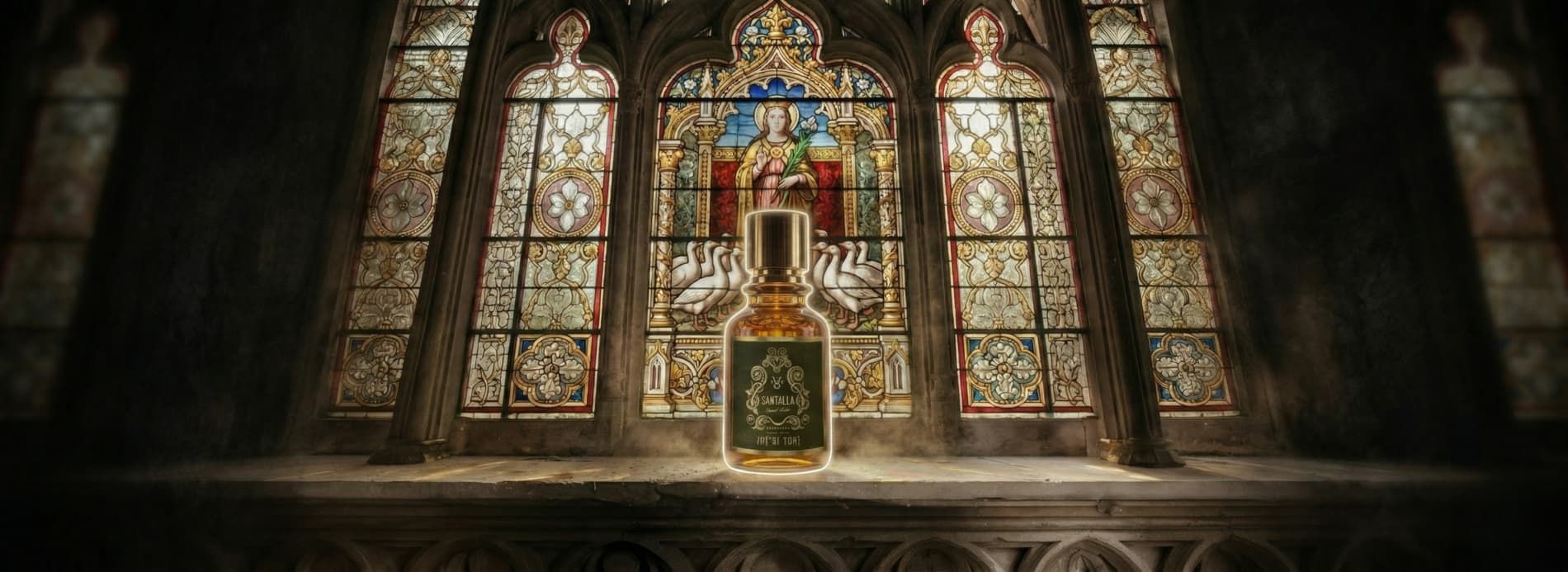
The fragrance opens with Mediterranean clarity. Bergamot and lemon bring a radiant freshness, almost solar in character, while green apple introduces transparency and vitality. Ginger cuts through the opening with immediate energy, echoing the dynamic spirit of the city.
As time unfolds, Santalla turns inward. Cardamom adds warmth, incense reappears with restraint and elegance — never dark, but softly illuminated — merging with sandalwood and vetiver to create a calmer, introspective depth.
Santalla is an olfactory reading of Spanish history, where Mediterranean light lives alongside the memory of stone — a fragrance shaped by time and quiet continuity.
50 ml - 145€
Taraq
Oriental spiced
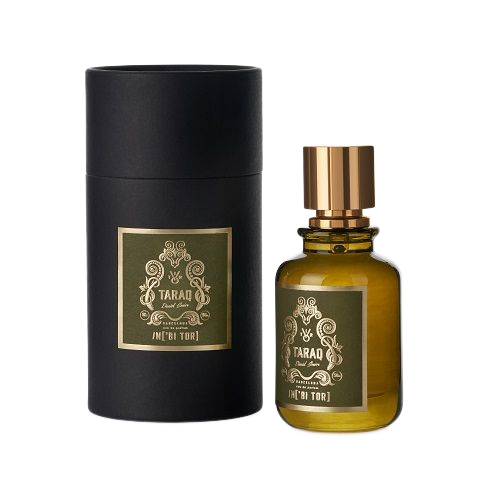
> Taraq
Taraq is a spicy oriental: refined, deep, and intensely human. Gently sweet, subtly piquant, richly spiced, and profoundly earthy. Elegant without ostentation, intimate without fragility — a perfume created to accompany rather than to announce itself.
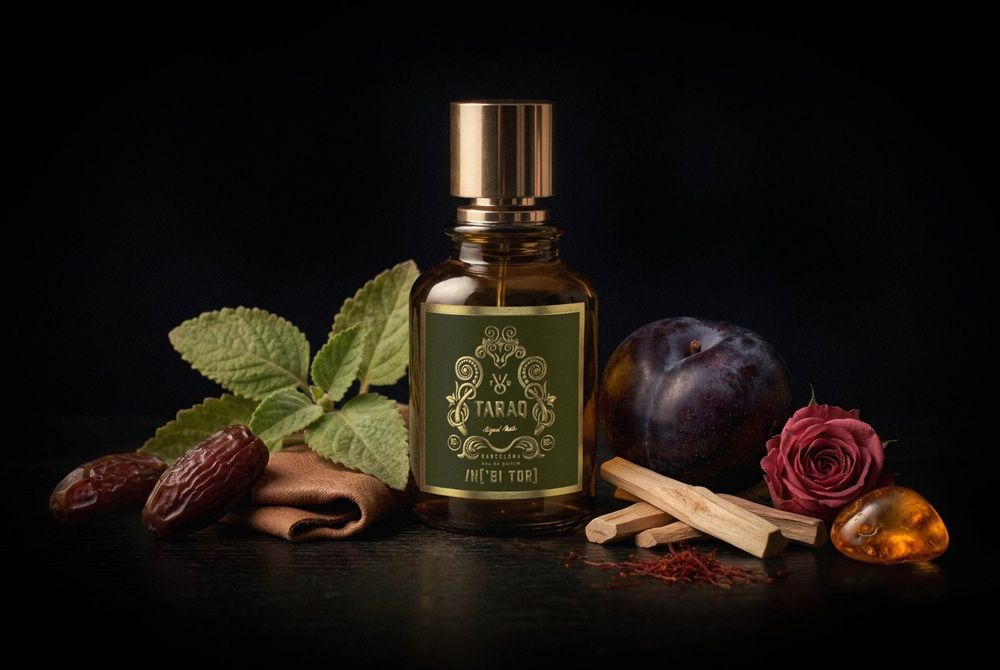
From the first moment it feels close and enveloping. A dense, mature sweetness of dark plum, dried fruits, and date evokes the tradition of preserving what is essential and of sweetening with restraint. Rose and amber bring a calm warmth, recalling ancient perfumed oils and the exchanges that linked both shores of the Mediterranean for centuries.
Saffron introduces a vibrant, spicy pulse, like a quiet rhythm that carries the fragrance from beginning to end. Its nuance between honey and hay creates a dry, warm texture, almost tactile, like the gentle air of an Andalusian courtyard at dusk.
As it unfolds, Taraq reveals its depth. The meeting of patchouli and agarwood forms a heart that is earthy and woody, softly smoky, connected to the tradition of bakhoor and oud slowly burned in quiet interiors. Leather, sandalwood, musk, and amber reinforce that sense of crafted material: old books, wooden chests, artisans’ workshops — places where time seems to rest.Its evolution recalls the slow journeys of the old carrack ships laden with goods, the Mediterranean ports where spices, resins, and woods passed from hand to hand. In that movement of aromas and sounds lies the true spirit of Taraq.
In its base,
woods and
resins do not seek to dominate, but to coexist, as two different ways of understanding the world coexisted for centuries. The perfume becomes intimate and enduring, a presence that remains without raising its voice, like the soft echo of a carraca fading into the evening.
Olfactory notes
Top notes: Plum, saffron, nuts.
Heart notes: Rose, dried date, leather accord, oud.
Base notes: Patchouli, sandalwood, musk, amber.
Nose: Daniel Josier.
> Description
Taraq is born from a land where cultures did not replace one another, but became interwoven. For centuries, the Iberian Peninsula was a place of constant encounter between the Arab and Hispanic worlds: two ways of understanding time, faith, music, architecture, and fragrance. From that layered coexistence — shaped by dialogue and mutual influence — this perfume emerges.
Its name comes from the Arabic verb ṭaraq: to strike, to knock, to announce one’s presence. From the same root came mitraqa —hammer— and, over time, the Spanish word matraca or carraca: a medieval percussion instrument made of wood and moving hammers. A simple object that produces a dry, rhythmic sound, carried to Spain through Arab heritage and woven into its musical, popular, and religious traditions.
The word carraca also recalls the great wooden ships that once crossed the Mediterranean. The deep creaking of their hulls as they moved through the water — a repeated, almost onomatopoeic sound — lies at the origin of both the instrument’s name and the very gesture of striking: ṭaraq. In a single echo, navigation, trade, music, and ritual come together as one shared memory.
For centuries, the matraca was both instrument and signal. It resonated in squares and markets, accompanied celebrations and ceremonies, and found its place in Spanish tradition. During Holy Week it replaced church bells in days of silence and reflection; it marked processions, awakened the faithful, and gave rhythm to ancient rites. A simple strike of wood transformed into language, cadence, and culture.
Taraq takes inspiration from that history and from a sound that traveled from port to port, from language to language, without losing its essence. It does not interpret one culture through the eyes of another. It lives in the space where both meet and transform each other, like two voices speaking within the same melody.
As a fragrance, Taraq is a spicy oriental: refined, deep, and intensely human. Gently sweet, subtly piquant, richly spiced, and profoundly earthy. Elegant without ostentation, intimate without fragility — a perfume created to accompany rather than to announce itself.
From the first moment it feels close and enveloping. A dense, mature sweetness of dark plum, dried fruits, and date evokes the tradition of preserving what is essential and of sweetening with restraint. Rose and amber bring a calm warmth, recalling ancient perfumed oils and the exchanges that linked both shores of the Mediterranean for centuries.
Saffron introduces a vibrant, spicy pulse, like a quiet rhythm that carries the fragrance from beginning to end. Its nuance between honey and hay creates a dry, warm texture, almost tactile, like the gentle air of an Andalusian courtyard at dusk.
As it unfolds, Taraq reveals its depth. The meeting of patchouli and agarwood forms a heart that is earthy and woody, softly smoky, connected to the tradition of bakhoor and oud slowly burned in quiet interiors. Leather, sandalwood, musk, and amber reinforce that sense of crafted material: old books, wooden chests, artisans’ workshops — places where time seems to rest.Its evolution recalls the slow journeys of the old carrack ships laden with goods, the Mediterranean ports where spices, resins, and woods passed from hand to hand. In that movement of aromas and sounds lies the true spirit of Taraq.
In its base, woods and resins do not seek to dominate, but to coexist, as two different ways of understanding the world coexisted for centuries. The perfume becomes intimate and enduring, a presence that remains without raising its voice, like the soft echo of a carraca fading into the evening.
Taraq is more than an olfactory composition: it is an invisible bridge between the Middle East and Spain. A fragrance that speaks of history, music, journeys, and transformation. A perfume in which an ancient Arab gesture still keeps the rhythm, centuries later, upon the skin.
50 ml - 150€
Torreja Sacra
Wine-soaked torrija | Gourmand
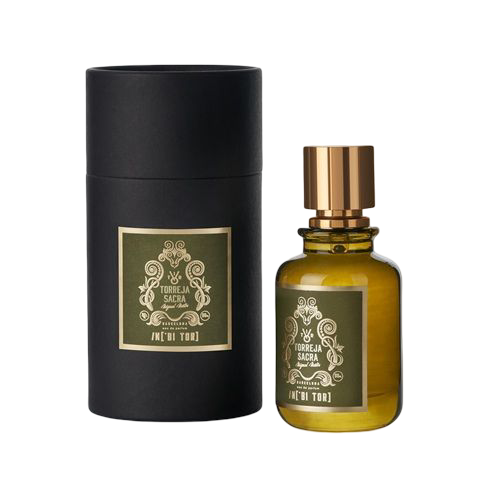
> Torreja Sacra
This perfume is born from stale bread and simple wine: from that ancient gesture that turns necessity into beauty. Torreja Sacra is inspired by the Spanish torrija, a 15th-century creation forged from hunger, ingenuity, and devotion. In an era when abundance was the exception, stale bread was never thrown away: it was combined with wine, honey, and fire to be reborn as food, comfort, and ritual. In convents, torrijas were offered to the sick and women who had just given birth, a gesture intended to restore body and spirit. Over time, the recipe left the cloisters and made its way into taverns and homes, until it became—even today—the quintessential dessert of Holy Week, a sweet symbol of fasting and celebration.
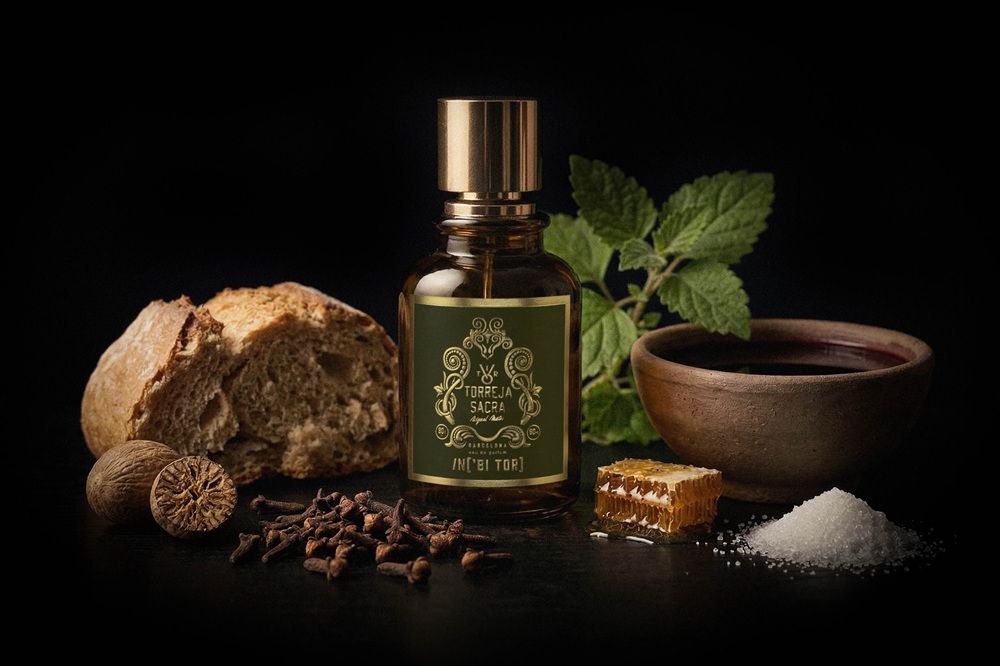
Torreja Sacra is not a complacent gourmand, but an olfactory liturgy: bread toasted over a fire, spiced wine, honey melting with milk, the murmur of spices—nutmeg, cloves, ginger—and a base of benzoin, patchouli, sandalwood, vanilla, and oud, where the earth becomes incense and memory becomes skin.
A reverent gourmand,
Torreja Sacra emerges from that same flame: a tribute to the ancestral wisdom that transforms the humble into art.
Olfactory notes
Notes: Red wine, sugar, nutmeg, ginger, clove, nuts, milk, bread, dried fruits, patchouli, sandalwood, oud, vanilla, honey, benzoin.
Nose: Miguel Matos.
> Description
From dry bread and humble wine, a miracle was born: the perfume of redemption. Torreja Sacra is a fragrance of fire, memory, and faith — the alchemy of humility turned into art.
The story of the torrija is the story of a people who learned to survive through ingenuity and faith. It was born far from courts and banquets, in the humblest kitchens, where bread — the symbol of life and sacred nourishment — could not be wasted. In a Spain marked by scarcity, the hardened bread of previous days was transformed with whatever was at hand: wine, honey, eggs, brown sugar. Soaked, sweetened, and given to the fire, that useless bread was reborn as something new.
It was not luxury; it was redemption. Each torrija was a small domestic miracle, an act of everyday faith and ingenuity.
For centuries, this gesture was repeated until it became tradition, symbol, and ritual. As early as the 15th century, Juan del Encina mentioned “torrejas” in his Cancionero, and in the cookbooks of the Spanish Golden Age — such as those of Domingo Hernández de Maceras (1607) and Francisco Martínez Montiño (1611) — its recipes were codified. The torrija was the sweet of the people, of the convent, and of the tavern: a food that united everyone, because it was born from what no one despised — bread.
Its oldest and most austere version, the torrija de vino, has its roots in the penitent Spain of Lent. Soaking bread in wine was not a whim; it was necessity. Wine, abundant in Iberian lands, brought moisture, acidity, and aroma, but also a deep symbolic value. In the union of bread and wine echoed the Christian mystery: body and blood, sacrifice and solace.
That is why wine-soaked torrijas became the sweet of Holy Week, when meat was forbidden and tables were filled with reverence. In convents, nuns offered them as food of compassion to the sick or women who had just given birth; in hospitals and shelters, they were balm and sustenance; in homes, an attainable luxury that smelled of warmth, caramelized sugar, and home.
Over time, this dessert of redemption spread throughout Spain, adopting the accents of each region. In Andalusia, it was bathed in sweet wine or honey; in Castile, in thick honey and spices; in other regions, with anise, lemon, or cinnamon. In Madrid, taverns served it with a glass of wine — a simple offering to pleasure.
Today, centuries later, torrijas are still prepared and enjoyed throughout Spain — especially during Holy Week — as a living symbol of tradition, memory, and shared sweetness.
And although each version had its own accent, the principle was the same: to rescue the bread, to transform the humble into the extraordinary.
Torreja Sacra is born from that same alchemical gesture. Its perfume is not a complacent gourmand, but an olfactory liturgy: bread toasted by fire, spiced wine, honey melting into milk, the murmur of spices — nutmeg, clove, ginger — and a base of benzoin, patchouli, sandalwood, vanilla, and oud, where earth turns to incense and memory becomes skin.
It is a tribute to fire and faith, to poverty transfigured into sweetness, to the ingenuity that turns scarcity into art.
Like the hands that once rescued stale bread and offered it to the flame, Torreja Sacra honors the alchemy of the humble — that ancestral wisdom teaching that even what is forgotten can be reborn as something sublime.
For in every torrija, as in every perfume, lies the same miracle: the ephemeral made eternal.
Explore the collection and find the fragrance that speaks your own language.